
By Chinedu Okorie
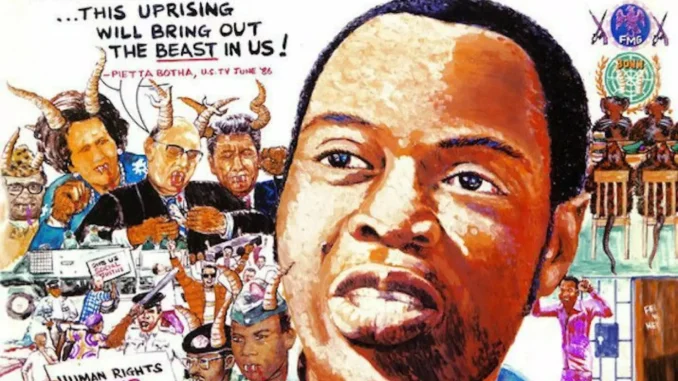
Fela Kuti’s music thrived on calculated chaos, and no artist captured that spirit visually like Lemi Ghariokwu. His album covers were not mere illustrations but bold social commentaries — calling out government corruption, political oppression, police brutality, and even the cultural politics of skin bleaching. Over the course of their collaboration, Ghariokwu designed 26 covers for Fela, each one a striking blend of illustration, collage, and social realism that elevated the music into a complete cultural statement.
From the spiritual symbolism of Alagbon Close (1974), where a whale capsizes a police boat to signify the triumph of good over evil, to the minimalist critique of Yellow Fever (1977), which condemned the widespread practice of skin bleaching, Ghariokwu’s work was fearless. His covers often sparked debate — sometimes even clashes with Fela himself. Sorrow Tears and Blood (1977), inspired by the Soweto student massacre, was initially rejected by Fela, leading to an eight-year rift between the two. Yet decades later, the artwork resurfaced triumphantly on reprints and books, vindicating Ghariokwu’s vision.
Other covers, like Fear Not For Man (1977), used collaged Nigerian faces to embody collective courage, while JJD (Johnny Just Drop) (1977) satirized Africans returning from abroad with Western affectations. By the time of Beasts of No Nation (1989), Ghariokwu was unflinching in portraying world leaders — from Reagan to Thatcher — as bloodsucking beasts, a daring visual echo of Fela’s uncompromising lyrics.
Together, Fela and Ghariokwu forged a partnership that was as much about art as it was about resistance. Their work remains a testament to the power of music and visual art to challenge authority, inspire pride, and document the struggles of their time.